
Hello world!
Welcome to WordPress. This is your first post. Edit or delete it, then start writing!
Read More →
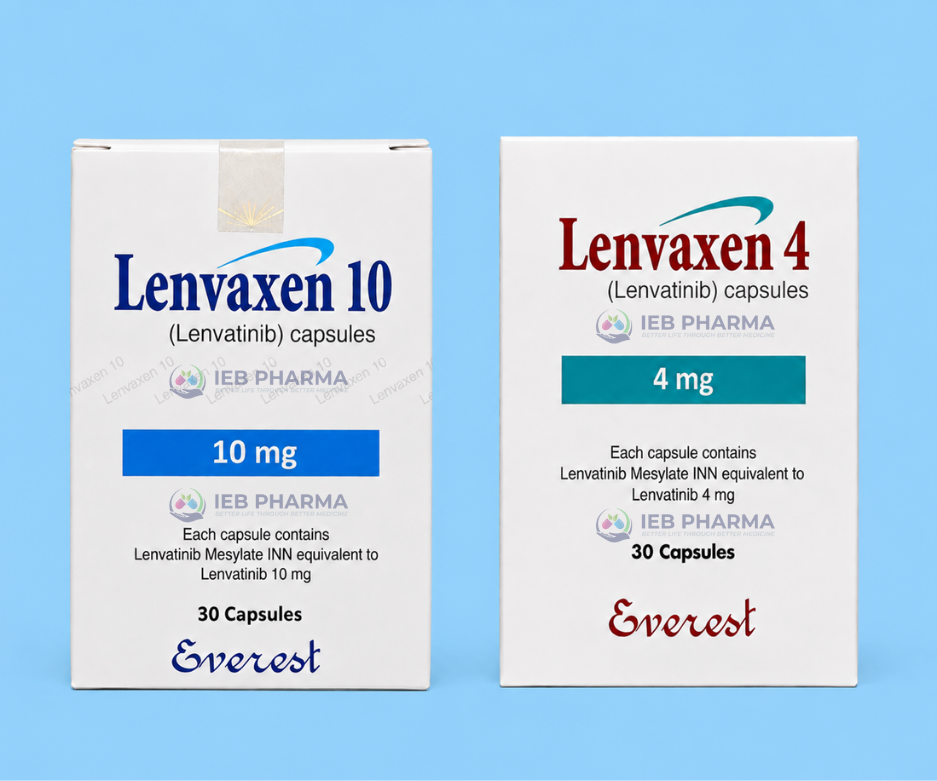
Lenvaxen is a brand of lenvatinib products listed in 4 mg and 10 mg strengths. Everest Pharmaceuticals Ltd. lists Lenvaxen 4 and Lenvaxen 10 as lenvatinib mesylate products. The 4 mg and 10 mg descriptions indicate the amount of lenvatinib contained in each dosage unit and should not be interpreted as the recommended daily dose for every patient.
Brand Name: Lenvaxen
Available strengths: Lenvaxen 4 mg and Lenvaxen 10 mg
Active ingredient: Lenvatinib
Active substance form: Lenvatinib mesylate
Medicine class: Multi-target receptor tyrosine kinase inhibitor
Route of administration: Oral
Associated manufacturer: Everest Pharmaceuticals Ltd.
Head Office: Everest Pharmaceuticals Ltd. is located at Rahman’s Regnum Centre (10th & 11th floor), 191/1 Tejgaon Commercial Area, Dhaka-1208, Bangladesh.
Manufacturing Plant: Everest Pharmaceuticals Limited B-33, 45 & 46, BSCIC, Kanchpur, Narayanganj–1430, Bangladesh.
Lenvaxen is an oral anticancer medicine containing lenvatinib. Lenvatinib belongs to a group of medicines known as receptor tyrosine kinase inhibitors (RTKIs).
Unlike medicines that act primarily on one biological target, lenvatinib affects several receptor pathways involved in the development and maintenance of tumors. These pathways include receptors involved in the formation of new blood vessels, cellular signaling, tumor growth, and other processes important to cancer progression.
Lenvaxen 4 mg and Lenvaxen 10 mg are dosage-unit strengths. A patient may require a total daily dose that is different from either individual capsule strength. Depending on the treatment regimen, multiple dosage units may sometimes be required to achieve the prescribed daily amount.
Patients should therefore never determine the number of capsules to take solely from the strength printed on the package.
Lenvatinib is used in specific cancer treatment settings. The approved indications and combinations can vary between countries and regulatory authorities.
Recognized treatment settings include certain patients with:
Lenvatinib may be used for adults with progressive, radioactive-iodine-refractory differentiated thyroid cancer that is locally recurrent or metastatic.
This means the cancer has progressed despite radioactive iodine treatment or is not expected to respond adequately to radioactive iodine.
Lenvatinib is used in selected patients with advanced renal cell carcinoma (RCC) in combination with another anticancer medicine.
Depending on the applicable regulatory label, combinations can include:
The precise indication and treatment sequence depend on the applicable product label and the patient’s clinical circumstances.
Lenvatinib is used for certain adults with unresectable hepatocellular carcinoma (HCC).
The prescribed dose in this setting is based partly on body weight.
In certain regulatory settings, lenvatinib is used together with pembrolizumab for selected patients with advanced endometrial carcinoma after prior systemic therapy and according to specified biomarker and treatment criteria.
The indication should always be confirmed against the prescribing information applicable in the patient’s country.
Lenvatinib is a multi-target receptor tyrosine kinase inhibitor.
It inhibits several signaling receptors, including:
These receptors participate in signaling pathways associated with angiogenesis, tumor growth, cellular activity, and cancer progression.
One important mechanism involves inhibition of vascular endothelial growth factor receptor (VEGFR) signaling. Tumors can stimulate the formation of new blood vessels to obtain oxygen and nutrients. This process is known as angiogenesis.
By inhibiting signaling involved in angiogenesis and other tumor-related pathways, lenvatinib can interfere with mechanisms that support tumor development.
The medicine’s clinical effect is therefore based on its ability to affect several molecular pathways rather than acting through a single mechanism.
Lenvaxen is available in the strengths:
These strengths represent the quantity of lenvatinib in each dosage unit.
For example, a 4 mg dosage unit contains 4 mg of lenvatinib, while a 10 mg dosage unit contains 10 mg.
This does not mean that a patient should automatically take one 4 mg or one 10 mg capsule every day.
The appropriate total daily dose depends on:
Lenvatinib does not have one universal dose for every patient.
Current U.S. labeling provides different recommended doses according to the indication.
Examples include:
| Treatment setting | Example labeled dose |
|---|---|
| Differentiated thyroid cancer | 24 mg once daily |
| Advanced RCC with pembrolizumab | 20 mg once daily |
| Advanced RCC with everolimus | 18 mg once daily |
| HCC, body weight ≥60 kg | 12 mg once daily |
| HCC, body weight <60 kg | 8 mg once daily |
| Selected endometrial carcinoma with pembrolizumab | 20 mg once daily |
These doses are reference examples from a specific regulatory labeling framework, not instructions for an individual patient.
A doctor may reduce, interrupt, or discontinue treatment when clinically significant adverse reactions occur.
Lenvatinib is generally administered once daily in the labeled regimens described above.
Patients should:
A patient should not increase the dose because they believe a higher amount will work faster.
Similarly, patients should not reduce the dose without professional advice.
Lenvatinib can generally be taken with or without food under current U.S. labeling.
Patients can therefore generally take their prescribed dose before or after meals.
For consistency, taking the medicine at approximately the same time each day can make it easier to remember.
If a particular local product label gives different instructions, the local approved product information should be followed.
If a patient forgets a dose, they should follow the instructions provided by their prescribing healthcare professional and the applicable product information.
Under current U.S. labeling, when a missed dose cannot be taken within 12 hours, the missed dose should generally be skipped and the next dose taken at the regular scheduled time.
Patients should not take two doses together to compensate for a missed dose unless specifically instructed by their healthcare professional.
Lenvatinib is a powerful prescription anticancer medicine and has clinically important risks.
Important warnings and precautions include:
Because of these risks, regular medical monitoring is important.
Hypertension is an important adverse reaction associated with lenvatinib.
Blood pressure should be assessed before treatment and monitored during therapy.
Patients should inform their healthcare professional if they experience:
Patients who already have hypertension may require careful blood-pressure management during treatment.
Lenvatinib can affect kidney function and may cause proteinuria, meaning excess protein in the urine.
Healthcare professionals may monitor:
Patients should report significant changes in urination, swelling, unusual fatigue, or other concerning symptoms.
Lenvatinib may cause liver-related adverse effects.
Patients with existing liver disease may require particularly careful assessment.
Monitoring can include liver-function tests such as appropriate measurements of:
Symptoms such as yellowing of the skin or eyes, dark urine, unusual abdominal discomfort, severe fatigue, or other concerning changes should be reported promptly.
Diarrhea is a recognized adverse reaction.
Persistent diarrhea can lead to:
Patients should contact their healthcare team if diarrhea becomes severe, persistent, or difficult to control.
Medical management may sometimes require supportive treatment, temporary interruption, or dose adjustment.
Hemorrhagic events can occur during lenvatinib treatment and can sometimes be serious.
Patients should promptly report:
Patients with conditions that increase bleeding risk should discuss those conditions with their healthcare professional before treatment.
Lenvatinib can be associated with cardiovascular complications, including cardiac dysfunction and arterial thromboembolic events.
Patients should seek urgent medical evaluation for symptoms such as:
These symptoms may have causes unrelated to lenvatinib, but they require prompt assessment.
Lenvatinib can affect thyroid function.
Healthcare professionals may monitor thyroid hormone levels during treatment.
Patients should tell their doctor about persistent symptoms such as:
Patients should not independently change thyroid medication while receiving lenvatinib.
Lenvatinib can cause changes in electrolyte levels, including hypocalcemia, or low calcium.
Depending on the clinical situation, doctors may monitor:
Patients experiencing muscle cramps, tingling, spasms, unusual weakness, or other concerning symptoms should inform their healthcare professional.
Lenvatinib may impair wound healing.
Patients should inform their doctor if they:
The healthcare team may determine that treatment should be temporarily interrupted around certain procedures.
Patients should never stop treatment independently for a planned procedure.
Lenvatinib can cause embryo-fetal harm.
Women who can become pregnant should discuss pregnancy prevention with their healthcare professional before starting treatment.
Pregnancy planning should be discussed with the treating team because recommendations concerning contraception and the period following treatment depend on the applicable prescribing information.
Patients should notify their healthcare professional immediately if pregnancy occurs during treatment.
Current U.S. labeling advises against breastfeeding during LENVIMA treatment and for a specified period following the final dose.
Because product labeling can differ by jurisdiction and may be updated, breastfeeding patients should discuss the appropriate approach with their doctor before starting treatment.
Patients should provide their healthcare professional with a complete list of medicines they use.
This should include:
Lenvatinib may also be administered as part of combination cancer treatment, such as with pembrolizumab or everolimus in specified indications.
Patients should not begin a new medicine or supplement without first discussing it with their healthcare professional when appropriate.
Lenvatinib can generally be taken with or without food.
Patients should follow any specific dietary instructions given by their healthcare team.
There is no reason to assume that changing food intake will make the medicine safer or more effective.
Alcohol consumption should also be discussed with the treating healthcare professional, particularly because individual health conditions, liver function, other medicines, and cancer treatment can affect the overall risk profile.
Depending on the indication and treatment combination, patients may experience adverse effects such as:
Not every patient experiences these effects, and their severity can vary.
Serious adverse reactions can include:
The supplied source material specifically identifies these important safety risks.
Patients should seek prompt medical attention for potentially serious symptoms such as:
These symptoms should not be ignored.
Particular care may be required in patients with:
The treating professional should review the patient’s medical history before and during therapy.
Regular monitoring may include:
Used to identify hypertension and determine whether blood-pressure treatment is needed.
Used to identify renal impairment and other kidney-related problems.
Used to detect proteinuria.
Used to identify potential hepatotoxicity.
Used to detect changes in thyroid activity.
Calcium and other electrolytes may be monitored.
May be required depending on risk factors and symptoms.
The precise monitoring schedule is determined by the patient’s doctor.
Patients should follow the storage instructions printed on the actual Lenvaxen package or in the applicable local product documentation.
General medicine storage principles include:
The exact storage requirements for Lenvaxen should be confirmed from the manufacturer’s current product labeling rather than assuming that the storage instructions for another lenvatinib brand are identical.
To verify the authenticity of an Everest Pharmaceuticals product, follow the verification process below:
Scan the QR Code: Scan the QR code printed on the product box.
The QR code will direct you to the official product verification page.
Open the Box: After accessing the verification page, open the product box and locate the verification code printed on the bottle.
Submit the Verification Code: Enter the verification code from the bottle on the verification page and submit it to check the product’s authenticity.
Verification Success: If the verification is successful, the product is confirmed as legitimate.
Verification Error: If the system displays a verification error, the product may be counterfeit or unauthorized. Do not use the product until its authenticity has been confirmed through an appropriate official channel.
Counterfeit Products: If a product is confirmed to be fake, do not use or distribute it. Report the suspected counterfeit product and supplier to the appropriate regulatory authorities, such as the Directorate General of Drug Administration (DGDA) in the world, and take appropriate legal action against the supplier through the relevant authorities.
Important: Always purchase medicines from licensed pharmacies or authorized suppliers and verify suspicious products before use.
Patients should not independently change, reduce, increase, or stop Lenvaxen.
Dose modification may sometimes be medically necessary because of adverse reactions, organ-function changes, or other circumstances.
A healthcare professional may decide to:
The decision depends on the patient’s individual clinical situation.
Patients taking Lenvaxen should remember:
This website provides general educational information about Lenvaxen 4 mg, Lenvaxen 10 mg, and lenvatinib.
It is not intended to replace consultation with a qualified physician, oncologist, pharmacist, or other healthcare professional.
The appropriate dose and treatment schedule depend on the patient’s diagnosis, treatment combination, age, body weight where relevant, kidney function, liver function, previous therapy, adverse reactions, and applicable regulatory labeling.
Patients should not use this information to self-diagnose cancer, select a dose, change treatment, discontinue therapy, or combine medicines without professional direction.
Regulatory approvals, indications, formulations, manufacturer information, availability, and prescribing recommendations can differ between countries and may change over time. The patient’s prescription and current official product information should always take priority.
The duration of lenvatinib treatment varies according to the cancer being treated, treatment response, side effects, and the healthcare professional's treatment plan. Some patients may continue treatment for an extended period while the medicine is controlling the disease and the benefits continue to outweigh the risks. Treatment duration should not be decided by the patient alone. Regular medical assessments are important to determine whether treatment should continue, be temporarily interrupted, or be permanently discontinued.
Yes. Depending on the severity of an adverse reaction, a healthcare professional may temporarily interrupt lenvatinib treatment. Dose interruptions or reductions can be part of the management of certain treatment-related toxicities. Patients should never stop taking Lenvaxen on their own without discussing the situation with their prescribing healthcare professional. The decision to interrupt or restart treatment depends on the specific adverse reaction, its severity, recovery, and the prescribed treatment regimen.
If vomiting occurs after taking a dose of lenvatinib, do not automatically take another dose unless your healthcare professional specifically instructs you to do so. Taking an additional dose could result in receiving more medicine than intended. Contact your prescribing healthcare professional or pharmacist for individualized advice, particularly if vomiting is persistent or prevents you from keeping fluids down. Severe or repeated vomiting may also contribute to dehydration and other complications that require medical assessment.
Yes. Diarrhea is a recognized adverse reaction associated with lenvatinib treatment. Persistent or severe diarrhea can result in dehydration, electrolyte abnormalities, and kidney problems. Patients should inform their healthcare professional if diarrhea becomes frequent, severe, or difficult to control. Drinking appropriate fluids may be important, but treatment of significant diarrhea should follow the advice of the healthcare team. Severe diarrhea accompanied by weakness, dizziness, reduced urination, or other concerning symptoms requires prompt medical attention.
Yes. Thyroid dysfunction, including changes in thyroid hormone levels, can occur during lenvatinib treatment. Healthcare professionals may monitor thyroid function with blood tests during therapy, particularly when clinically appropriate. Symptoms such as unusual tiredness, changes in weight, sensitivity to cold or heat, or changes in heart rate can have many causes, so patients should discuss new or persistent symptoms with their healthcare team rather than changing thyroid medicines or lenvatinib doses themselves.
Lenvatinib treatment can be associated with abnormal electrolyte levels, including low blood calcium. Healthcare professionals may perform blood tests to monitor calcium and other electrolytes when appropriate. Symptoms of significant calcium abnormalities can include muscle cramps, tingling, spasms, or other unusual sensations. Patients should report concerning symptoms to their healthcare team. Calcium supplements or other treatments should only be used according to professional medical advice.
Lenvatinib may be used together with other medicines depending on the treatment regimen, and its safety can be affected by a patient's other medications and health conditions. Before starting treatment, patients should provide their healthcare professional with a complete list of prescription medicines, non-prescription medicines, vitamins, and supplements. Do not start, stop, or change another medicine without professional advice. Drug interactions and combined treatment risks should be evaluated individually.
Lenvatinib may impair wound healing. This is particularly important for patients who are planning surgery or who have recently undergone a surgical procedure. Patients should tell their surgeon and oncology team that they are receiving lenvatinib. Depending on the planned procedure and the patient's clinical circumstances, the healthcare professional may recommend an appropriate treatment interruption before or after surgery. Patients should not independently stop treatment because the timing of any interruption needs to be medically determined.
Patients should promptly seek medical attention for potentially serious symptoms such as severe chest pain, difficulty breathing, sudden weakness or numbness, severe headache, confusion, seizures, significant bleeding, severe abdominal pain, symptoms of a serious allergic reaction, or markedly reduced urination. Severe or uncontrolled high blood pressure, persistent severe diarrhea, or other rapidly worsening symptoms should also be reported promptly. Lenvatinib has important warnings involving cardiovascular, gastrointestinal, kidney, liver, neurological, and bleeding complications, so concerning symptoms should not be ignored.
Yes. Patients should inform their healthcare professional about planned dental procedures and provide a complete medical history. Lenvatinib treatment has been associated with osteonecrosis of the jaw, particularly in some patients who have additional risk factors or receive certain other therapies. Good oral health and appropriate dental care may be important during treatment. Your oncology and dental teams can determine the safest approach based on your treatment regimen, dental procedure, and individual risk factors.